
Understanding What a Buy Sell Agreement Is and Why It Matters
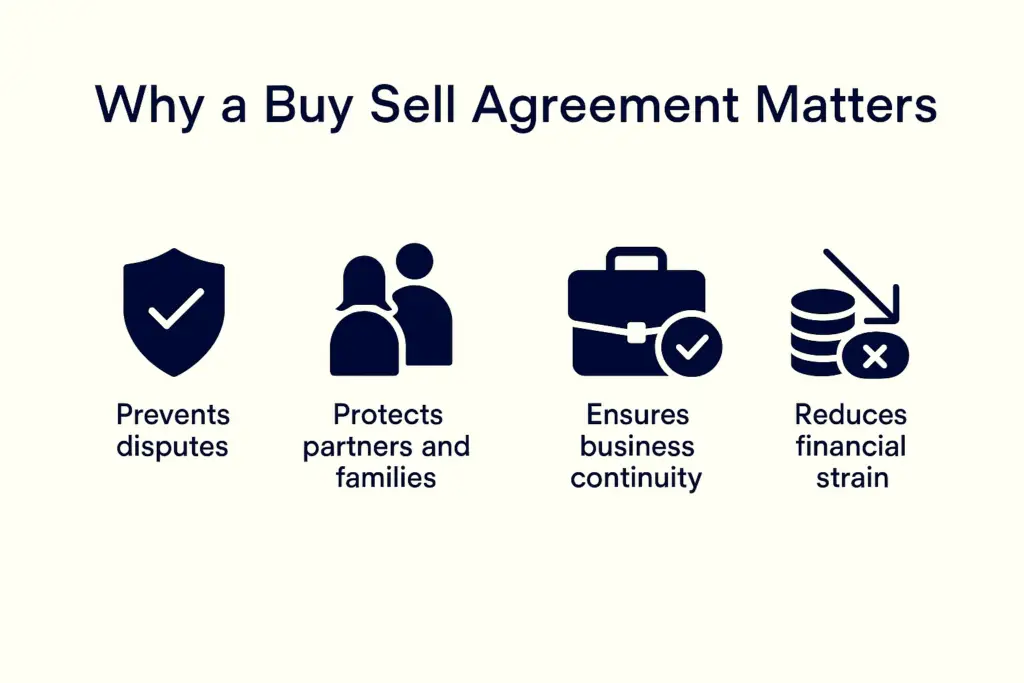
A buy sell agreement is one of the most important documents a business can have, yet many owners either do not have one or assume the one they signed years ago will still work today. A buy sell agreement outlines what happens if an owner retires, exits, becomes disabled, or passes away. When it is built correctly, it protects the business, the remaining owners, and the exiting owner’s family. When it is not, it creates confusion, delays, and unnecessary conflict.
This guide explains what a buy sell agreement is, why it matters, how it works, and how to build one that actually functions when it is needed most.
Executive Summary
- A buy sell agreement defines how ownership transfers when an owner exits, retires, becomes disabled, or passes away.
- Many agreements fail because they are outdated, unfunded, or unclear about valuation and triggering events.
- A strong agreement requires clear definitions, a reliable valuation method, proper funding, and coordination with tax and estate planning.
- Any multi‑owner business, family business, or company with key employees should consider one.
- Buy sell agreements should be reviewed regularly to ensure they still reflect the business, its value, and the owners’ goals.
What a Buy Sell Agreement Does and Why It Fails Without the Right Structure
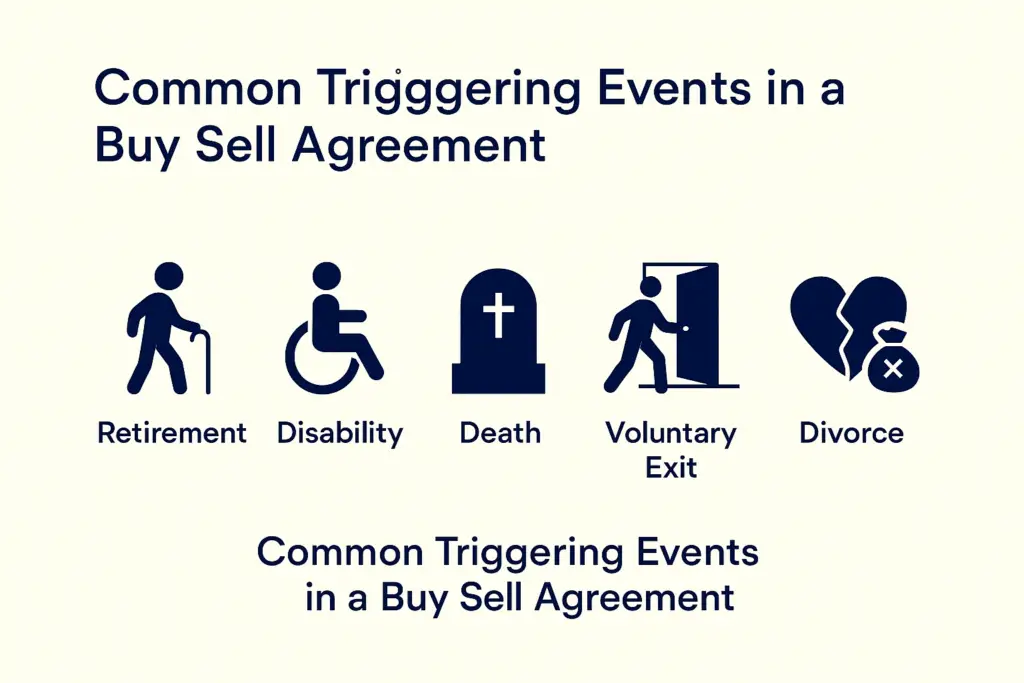
A buy sell agreement is a legally binding contract that determines what happens to an owner’s share of the business when a major event occurs. These events, known as triggering events, typically include retirement, voluntary exit, disability, death, divorce, or bankruptcy. The agreement outlines who can buy the departing owner’s interest, how the price will be determined, and how the purchase will be funded.
Many agreements fail because they lack clarity or structure. Some do not define triggering events clearly. Others rely on outdated valuation numbers or vague formulas that no longer reflect the business. Many are not funded at all, which means the remaining owners cannot afford to execute the agreement. And in many cases, the agreement is not coordinated with the owner’s estate or tax planning, which creates unintended consequences for families and partners.
A buy sell agreement only works when it is clear, current, and financially supported.
How to Build a Buy Sell Agreement That Actually Works
A strong agreement includes four essential components:
Clear Triggering Events
The agreement should specify exactly what events trigger a buyout. Retirement, disability, death, voluntary exit, divorce, and bankruptcy are common examples. Clarity prevents disputes and ensures everyone understands what qualifies as a transition event.
A Reliable Valuation Method
Owners should know exactly how the business will be valued when a triggering event occurs. Common approaches include a fixed value, a formula based on revenue or earnings, or an independent appraisal. The key is consistency and fairness.
Proper Funding
A buy sell agreement is only as strong as its funding. Life insurance, disability buyout insurance, cash reserves, or structured installment payments ensure the agreement can be executed without putting financial strain on the business or the remaining owners.
Coordination With Estate and Tax Planning
A buy sell agreement should align with the owner’s estate plan, tax strategy, and long term goals. This coordination prevents surprises and ensures the agreement supports the broader financial picture.
Who Needs a Buy Sell Agreement and When to Review It
Any business with more than one owner should have a buy sell agreement. This includes partnerships, family businesses, companies with minority shareholders, and businesses with key employees who may become future owners. Owners planning retirement or exit within the next decade should also have one in place.
A buy sell agreement should be reviewed every three to five years or after major changes in business value, ownership, tax law, or personal circumstances such as marriage, divorce, or disability. Regular updates keep the agreement relevant and effective.
Ready to Build a Buy Sell Agreement That Actually Works
A buy sell agreement is one of the most important tools for protecting your business and ensuring a smooth transition when an owner exits. When it is clear, funded, and coordinated with your broader planning, it becomes a powerful part of your long term strategy. If you are ready to build or review your agreement, M&M Wealth Associates can help you create a structure that protects your business, your partners, and your future.