
Understanding the CRC: The Retirement Specialist Behind Confident Planning
A Certified Retirement Counselor (CRC) brings specialized training to every stage of retirement planning, from early accumulation to long‑term income distribution. The CRC designation focuses on helping individuals make informed decisions about saving, investing, benefits, and risk management so they can build a confident and sustainable retirement strategy at any age.
This broader expertise sets the foundation for understanding how the CRC differs from other financial designations and why it matters for anyone planning their future.
Executive Summary
- CRCs specialize in retirement planning across all life stages, not just the years near retirement.
- The CRC curriculum emphasizes income planning, Social Security, Medicare, tax efficiency, and longevity risk.
- CFP, ChFC, and CFA designations are strong but are generalist or investment‑focused rather than retirement‑specific.
- Working with a CRC provides deeper guidance on the decisions that shape long‑term retirement security.
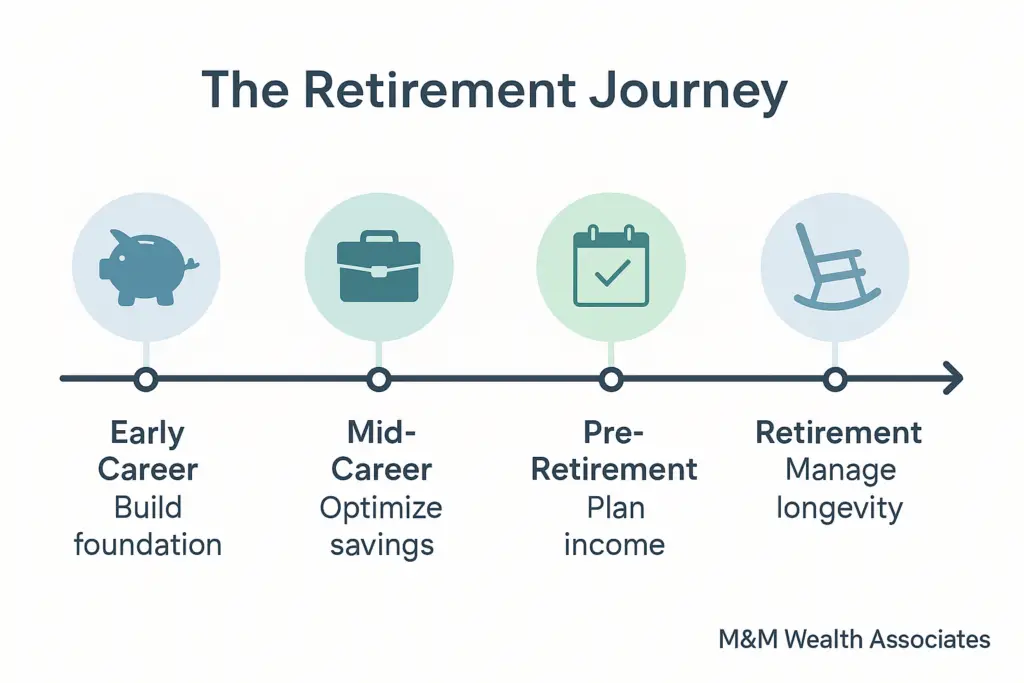
Why Retirement Requires a Specialist
Retirement planning has evolved into one of the most complex areas of personal finance. Longer lifespans, rising healthcare costs, unpredictable markets, and shifting tax rules mean that the decisions people make today can affect their financial security for decades. General financial planning knowledge is helpful, but it often does not go deep enough into the unique challenges of retirement.
A CRC is trained to address these challenges directly. Their expertise spans the entire retirement journey, from early accumulation strategies to income distribution, benefit coordination, and long‑term risk management. This specialization allows them to guide clients through decisions that require precision and foresight, helping them avoid costly mistakes and build a plan that supports both lifestyle and longevity.
Understanding the Certified Retirement Counselor (CRC) Designation
The Certified Retirement Counselor designation was created to fill a gap in the financial planning landscape. While many credentials focus on broad financial topics, the CRC is built specifically around the realities of retirement planning. Its curriculum covers retirement income strategies, tax‑efficient withdrawal planning, Social Security and Medicare decisions, employer plan rules, and the behavioral aspects of retirement.
Earning the CRC requires relevant education or industry experience, a comprehensive exam, and ongoing continuing education. The program emphasizes both technical knowledge and practical application, ensuring that CRCs can translate complex concepts into clear, actionable guidance for clients. This blend of expertise and communication skill is what makes the CRC uniquely valuable.
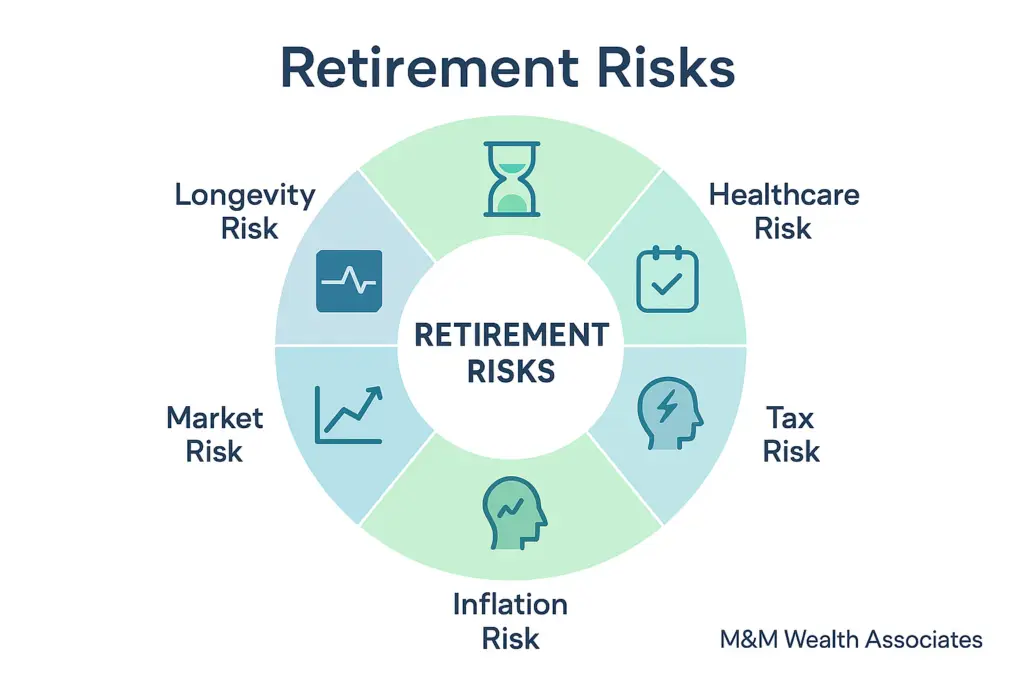
How Advisors Earn the CRC Designation
Advisors earn the Certified Retirement Counselor designation by meeting education or experience requirements, completing a focused retirement‑planning curriculum, and passing a comprehensive exam. The program covers retirement income strategies, Social Security and Medicare rules, employer plans, tax considerations, and the behavioral side of retirement decisions. CRCs must also complete ongoing continuing education to stay current with changing laws and best practices.
This combination of training, testing, and ongoing development ensures that CRCs bring both depth and practical skill to the retirement planning process.
CRC vs CFP, ChFC, CFA, and RICP: Key Differences
To understand how the CRC stands apart, it helps to compare it with other well‑known financial designations. Each credential has strengths, but their focus areas differ significantly
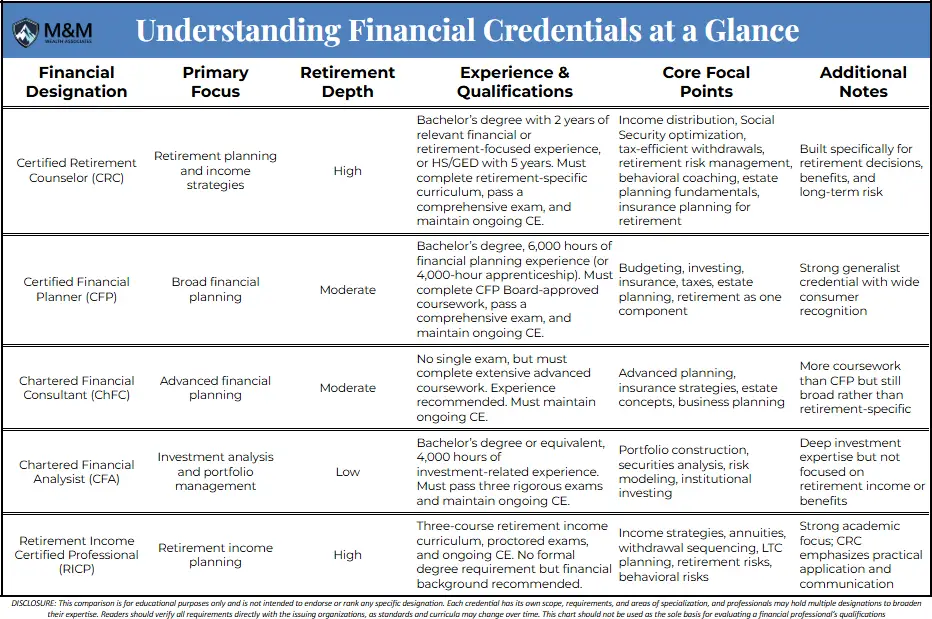
This comparison highlights the CRC’s unique position as a retirement specialist rather than a generalist or investment analyst. It is designed for the decisions that matter most when planning for long‑term financial security
What Clients Gain by Working With a CRC
Working with a CRC provides clients with a level of retirement‑focused guidance that general financial designations do not always offer. CRCs help individuals build sustainable income plans that balance withdrawals, taxes, market volatility, and longevity. They assist with Social Security and Medicare decisions, evaluate employer plan options, and prepare clients for healthcare and long‑term care costs.
Beyond technical expertise, CRCs bring behavioral coaching to the planning process. Retirement is a major life transition, and it often involves emotional decisions about identity, lifestyle, and financial security. CRCs are trained to help clients stay grounded, avoid reactive decisions, and maintain confidence through market cycles and life changes.
The result is a more stable, thoughtful, and resilient retirement plan.
Who Should Work With a Certified Retirement Counselor
A CRC is valuable for anyone who wants to build a strong retirement foundation, regardless of age or income level. Younger individuals benefit from early planning strategies that maximize long‑term growth and tax efficiency. Mid‑career professionals gain clarity on savings goals, investment choices, and benefit coordination. Pre‑retirees and retirees receive specialized guidance on income distribution, risk management, and healthcare decisions.
In every case, the CRC’s retirement‑focused expertise helps clients make decisions that support both their current needs and their long‑term goals.
Final Thoughts
Retirement planning is too important to leave to generalists. The CRC designation exists because retirement requires deeper, more specialized knowledge than most financial credentials provide. Whether someone is just beginning to save or preparing to transition into retirement, working with a Certified Retirement Counselor offers clarity, confidence, and a strategy built around the realities of modern retirement.
Book a complimentary retirement strategy session with M&M Wealth Associates and take the next step toward confident planning.